
Haiti Cardiovascular Disease Cohort Study: defining the local epidemic of heart disease to design context-specific interventions that save lives
The Haiti Cardiovascular Disease Cohort is a population-based study of approximately 3,000 adults (age > 18 years) in Port‑au‑Prince, funded by NHLBI (R01HL143788). Through clinical exams, laboratory testing, and cardiovascular imaging, the cohort provides previously unknown data on the prevalence and incidence of cardiovascular risk factors and diseases in one of the poorest settings in the world. The cohort investigates modifiable poverty-related social and environmental drivers of heart disease spanning food insecurity, neighborhood violence and insecurity, environmental pollution, toxic heavy metals, and social vulnerabilities that may be driving early-onset high blood pressure and heart disease in settings of extreme poverty and adversity. In turn, these data are used to design targeted interventions for CVD prevention and treatment at the individual-, community- and population-levels. Key findings include:
Hypertension is the leading CVD risk factor, with age-adjusted prevalence of 14.7% and 53.5% of participants had elevated blood pressure. (Yan et al., 2024).
Obesity is the second most common risk factor, with prevalence of 17.1%. (Dade et al., 2022)
The burden of prevalent heart disease in Haiti is 14.9%. Heart failure prevalence is 11.9%—15X higher than global modeling estimates of 0.7%. (Yan et al., 2024)
Hypertension incidence is 29.3% (Yan et al., 2026).
Extreme social vulnerability, as measured by a multivariable index adapted by the CDC, is associated with prevalent hypertension and heart disease. (Roberts et al., 2024)
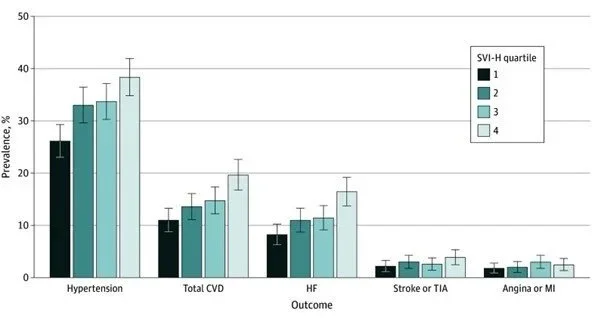
Figure 1. HF indicates heart failure; MI, myocardial infarction; TIA, transient ischemic attack. Error bars represent 95% CI (Roberts et al., 2024)