HAITI CVD Research and Training
Our work focuses on understanding cardiovascular disease in low-resource settings through population-based studies, biological and environmental investigations, implementation science, and capacity building. We use rigorous demography and epidemiology methods, community-based engagement, and interdisciplinary collaboration to advance the science of cardiovascular health and drive measurable improvements in patient care.
Haiti Cardiovascular Disease Cohort Study: defining the local epidemic of heart disease with local accurate and adjudicated data
At the center of our work is the Haiti Cardiovascular Disease Cohort, a population-based study of approximately 3,000 adults (age > 18 years) in Port‑au‑Prince, funded by NHLBI (R01HL143788). Through clinical exams, laboratory testing, and cardiovascular imaging, the cohort provides previously unknown data on the prevalence and incidence of cardiovascular risk factors and diseases. It also studies poverty-related social and environmental drivers of heart disease. In turn, these data are used to design targeted interventions for CVD prevention and treatment at the individual-, community- and population-level. The study began in 2018 and continues with participants in active follow-up. Key findings include:
Hypertension is the leading CVD risk factor, with age-adjusted prevalence of 14.7% and 53.5% of participants had elevated blood pressure. (Yan et al., 2024).
Obesity is the second most common risk factor, with prevalence of 17.1% (Dade et al., 2022)
The burden of prevalent heart disease in Haiti is over two-fold greater than global estimates, with early-onset heart failure over 15-fold higher than previously estimated in Haiti (11.9% vs 0.7%) (Yan et al., 2024)
Heart Failure is the predominant CVD with an age-adjusted prevalence of 11.9% (95% CI 10.5%, 13.5%), followed by stroke with age adjusted prevalence of 2.4% (95% CI 1.9%, 3.3%). (Yan et al., 2024)
Extreme social vulnerability, as measured by a multivariable index adapted by the CDC, is associated with prevalent hypertension and heart disease (Figure 1) (Roberts et al., 2024)
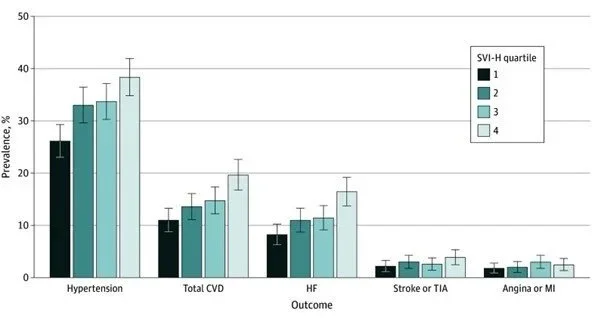
Figure 1. HF indicates heart failure; MI, myocardial infarction; TIA, transient ischemic attack. Error bars represent 95% CI (Roberts et al., 2024)
Environmental Pollution and Heart Disease: Identifying poverty-related modifiable environmental risk factors driving high blood pressure and heart disease in poor communities
Environmental pollution, particularly heavy metal exposure and poor air quality pose major threats to cardiovascular health. Our work found that environmental lead levels in Haiti are 5-fold higher than the US and associated with increased systolic blood pressure (Yan et al., 2023). Our work also showed the vast majority of Haiti households use indoor charcoal for cooking, which is associated with indoor air pollution, and this is associated with increased blood pressure and heart failure (Rasul et al., 2025 & Yan et al ., 2026). Based on these findings, Dr. Lily Yan is leading work to identify local sources of toxic metals for exposure reduction, in collaboration with Pure Earth and the Environmental Centers at Wash U (Jay Turner Group).
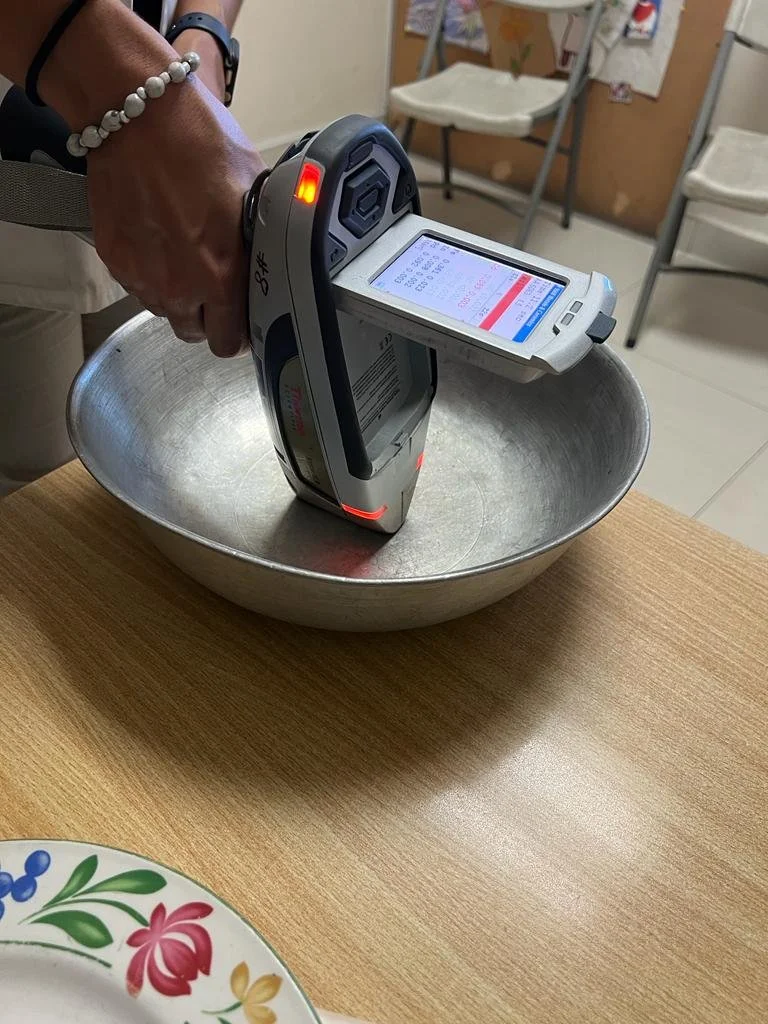
Her work funded by NHLBI (K23HL177149-01A1), uses portable X‑ray fluorescence (XRF) technology, ultrasonic personal air samplers, and source collection to pinpoint the most likely sources of high blood lead levels. These measurements are complemented by interviews and household assessments to understand everyday practices, products, and environments that contribute to lead exposure.
In addition, in partnership with Dr. Patrick Parsons at Parsons Laboratory, we are assessing 24 trace metals and urine arsenic in biobanked samples to analyze multi-metal exposures and incident disease.
Community-based Hypertension Treatment: Using implementation science to bridge the hypertension treatment gap in poor communities
Our work found barriers to hypertension treatment included difficulty getting to clinic, limited time with physicians, and patient belief that hypertension was due to stress (St Sauveur et al., 2025). Based on these findings, we designed a community-based hypertension management pilot among 100 participants with uncontrolled hypertension. This intervention consisted of task-shifting medication delivery and titration to community health workers, and community-based delivery of care, for 12 months. We found compared to matched controls, the 100 intervention participants had a 12.8 mmHg greater SBP reduction (St Sauveur et al., 2024)
This work was funded by the NIH John E. Fogarty International Center ( R21TW011693)
Preclinical Cardiovascular Disease Among Adolescents & Young Adults: Defining the onset of cardiovascular risk in young adults
Adolescents and young adults living with HIV (AYALH) who have survived decades of HIV, now face HIV-related comorbidities, specifically cardiovascular disease (CVD), as they age into adulthood. The epidemiology of preclinical CVD among AYALH is not defined, including age of onset, progression, and associated risk factors. Dr. Lindsey Reif work funded by NHLBI (K01HL167654), establishes the epidemiology of preclinical CVD among AYALH and adapts an evidence-based intervention to prevent the onset of preclinical CVD and its progression through a prospective cohort study of 500 HIV+ and 500 HIV- participants ages 18-30 years in Haiti followed for 3 years.
In addition, our study among young people age 18-30 years in Haiti showed high blood pressure prevalence was 23.5% (95% CI: 20.9%–26.3%) including 12.1% with elevated BP (95% CI: 10.1%–14.4%), 7.9% with stage 1 hypertension (95% CI: 6.3%–9.8%) and 3.5% with stage 2 hypertension (95% CI: 2.4%–4.8%). Dyslipidemia prevalence was 34.9% (95% CI: 31.8%–38.1%), kidney disease prevalence was 6.4% (95% CI: 5.3%–8.6%) (Reif et al., 2025)
Reproductive Health and Heart Disease: Identifying adverse reproductive health as an emerging risk factor for heart disease among women living in poverty
Women experience disproportionately poor cardiovascular outcomes, especially in low-income settings, where the burden is often greatest. While factors such as early menopause and adverse pregnancy outcomes are well-established risk factors for cardiovascular disease (CVD) in high-income countries, their impact remains underexplored in low-resource settings.
In Haiti, the estimated CVD mortality rate among women is 451.2 deaths per 100,000, the highest in the Latin American and Caribbean region, more than four times the rate in the United States (101.5 deaths per 100,000). To address this critical knowledge gap, we introduced a reproductive health questionnaire in 2023, adapted from the National Health and Nutrition Examination Survey (NHANES) developed by the Centers for Disease Control and Prevention (CDC). This effort aims to better understand how reproductive health factors influence cardiovascular outcomes among women in Haiti.
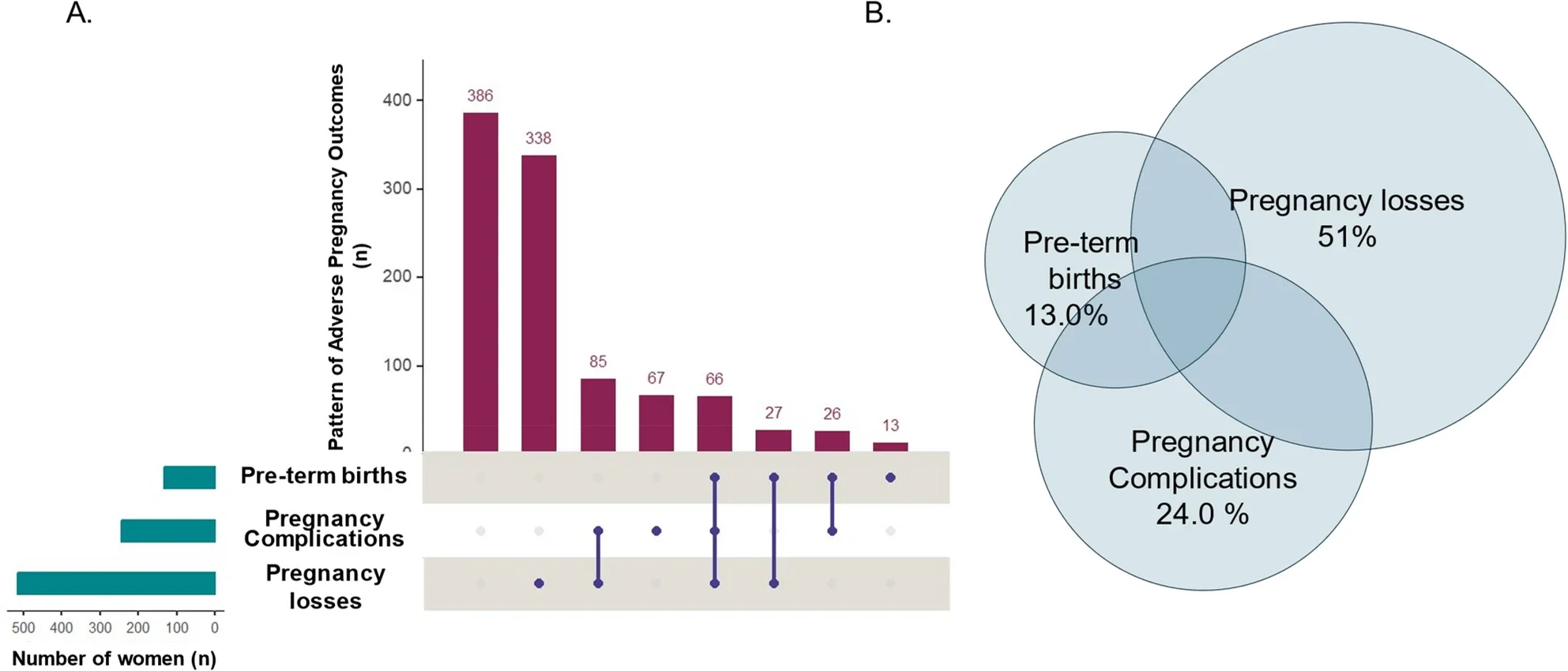
Adverse Pregnancy Outcomes: Individual burden and co-occurrence of key adverse pregnancy outcomes. A Counts of women with one or more reported adverse pregnancy outcomes. B Visual summary of co-occurrence of adverse pregnancy outcomes n: 623 (Alexandre et al., 2025).
Led by Dr. Wheytnie Alexandre, our research to date has revealed a high prevalence (66%) of adverse pregnancy outcomes (APOs), including pregnancy loss and hypertensive disorders of pregnancy, among Haitian women. Women with a history of APOs have a 37% higher prevalence of cardiovascular disease driven primarily by heart failure, even after accounting for age, hypertension, and other risk factors (Alexandre et al., 2025). We plan to further study the relationship between APO and incident hypertension and CVD. Beyond pregnancy outcomes, we are expanding our research to explore biological markers of reproductive health, such as anti-Müllerian hormone (AMH), using biobanked samples. This work will help deepen our understanding of how reproductive health influences long-term cardiovascular risk.
Cardiovascular Disease Research Training Program in Haiti
The goal of this training program is to strengthen research that ultimately improves cardiovascular disease (CVD)-related health outcomes in Haiti. We address the knowledge gaps in understanding and intervening in the CVD epidemic in Haiti by providing mentored CVD research training to Haitian investigators, training research staff in technical CVD skills, and establishing a CVD Implementation Network to accelerate the uptake of CVD interventions across the country.
Echocardiography capacity building
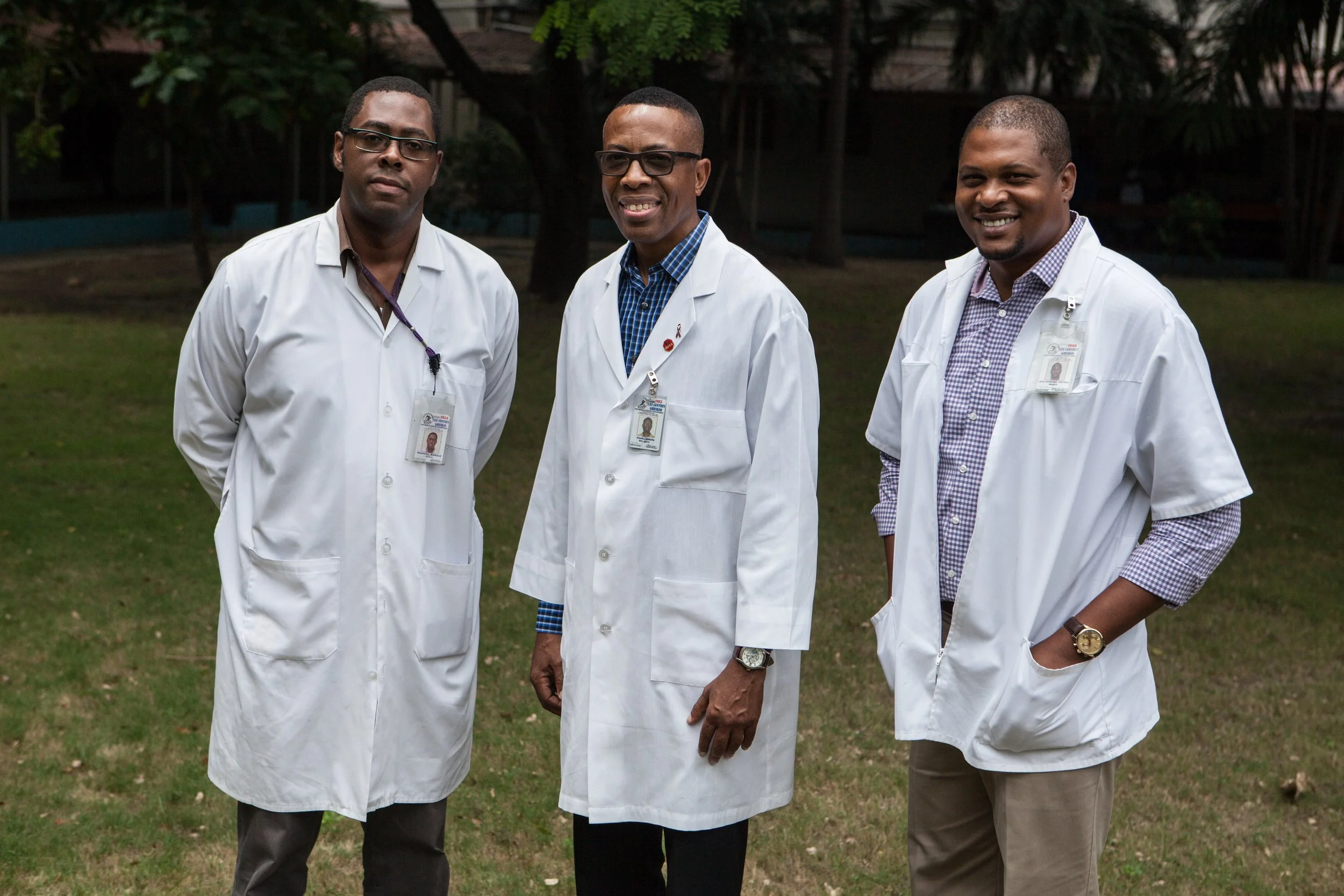
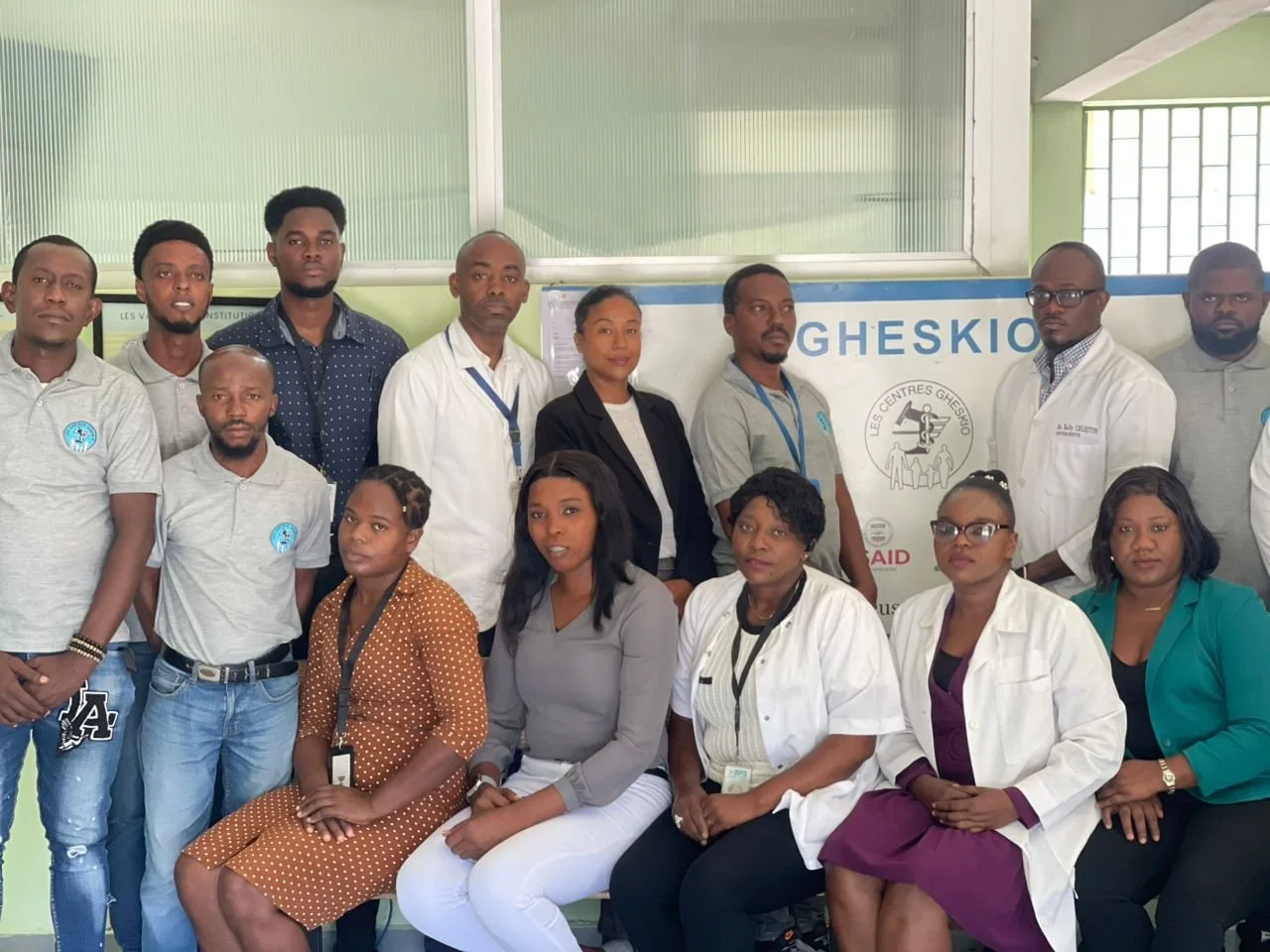
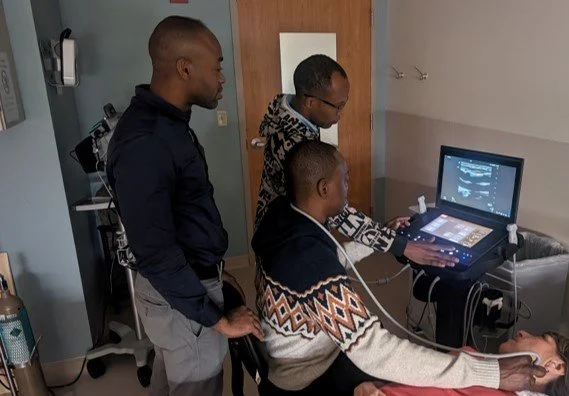
In collaboration with Washington University Cardiovascular Imaging and Clinical Research Core Lab Haitian physicians completed intensive, hands‑on ECHO training using the Sonosite PX platform, including instruction in image acquisition, measurement, and cloud‑based data management. Trainees progress toward full echocardiography certification, and several now serve as ECHO leads at GHESKIO, training additional physicians across CVD, OBGYN, and HIV clinics.
This work was funded by the NIH John E. Fogarty International Center ( D43TW011972)